01
Phở bò
A beef-bone broth simmered for eighteen hours with cinnamon, star anise and black cardamom. It is eaten in the morning, with freshly made noodles, and it is half the country's breakfast.
From the rice paddies of Hội An to the hush of the countryside. A country you listen to — and take time to understand.
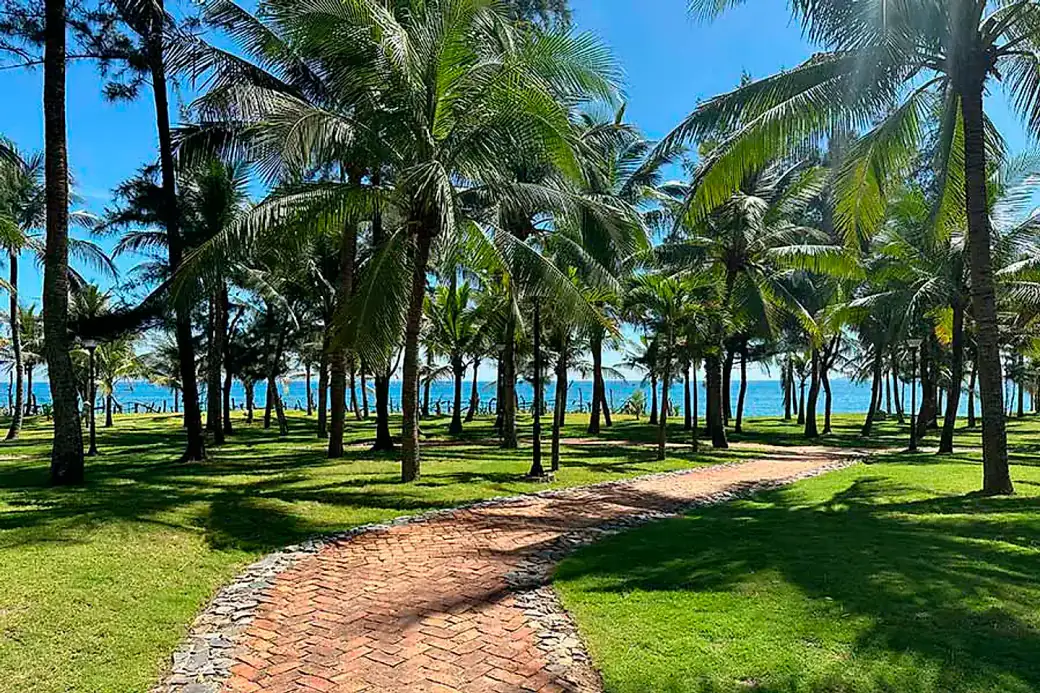
On Hà My beach, on the stretch of coast that runs from Hội An up towards Da Nang, twelve minutes from the old town and twenty-five from the airport. One of the least built-up stretches between the two cities.
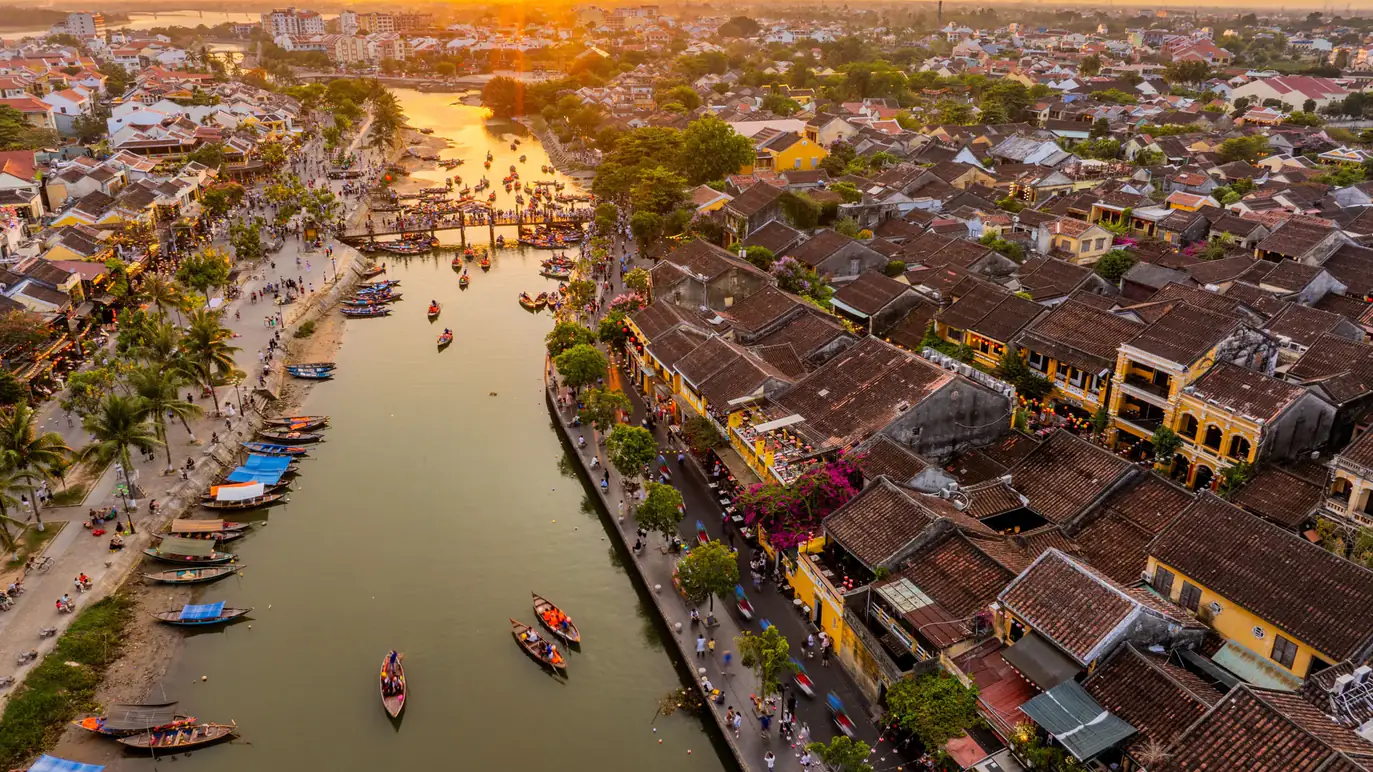
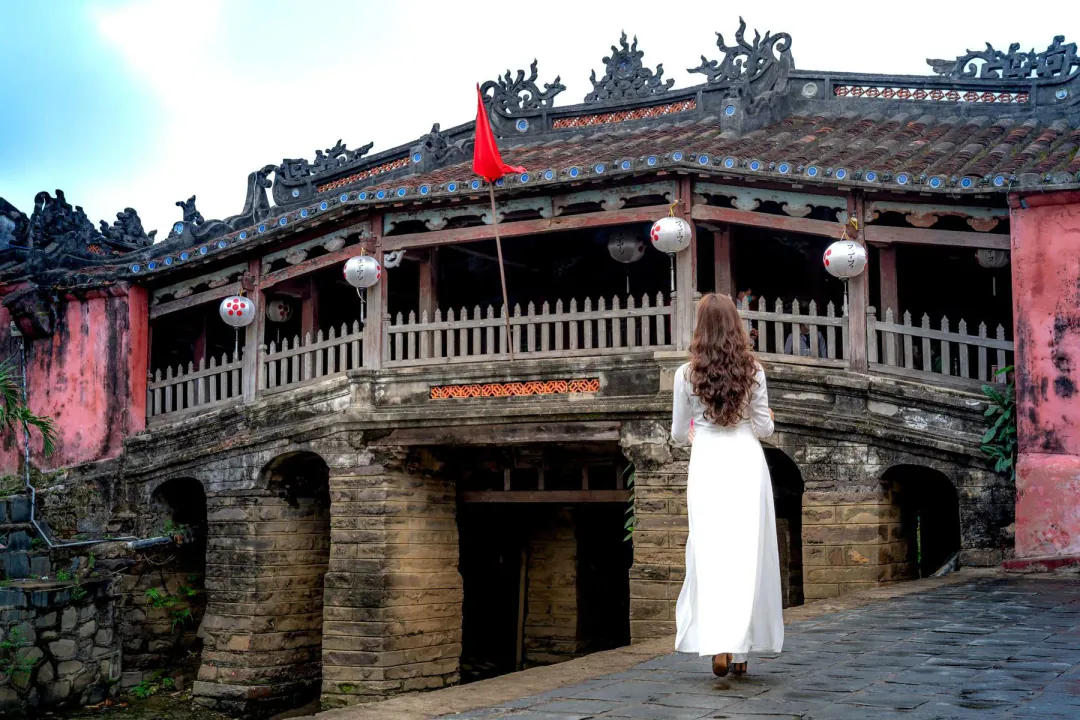
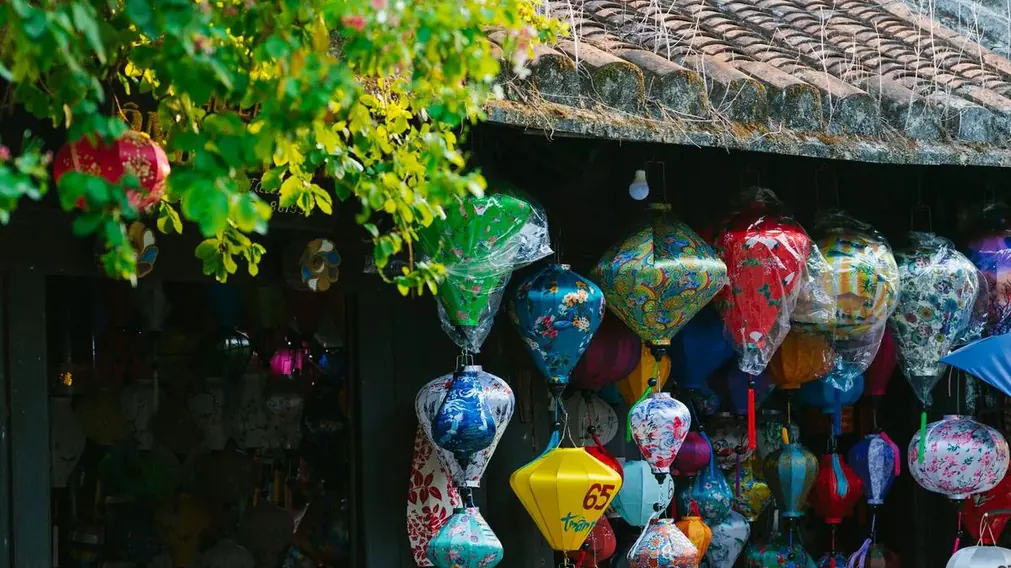
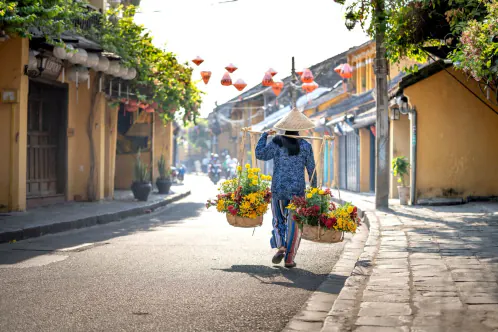
Hội An is the favourite gateway to that rhythm. A UNESCO port town with 16th-century Chinese and Japanese houses, bridges with temples on top, and at night a ritual that happens nowhere else: thousands of silk lanterns lit on the Thu Bồn river. It isn't a show for tourists — the town has been doing this for four hundred years.
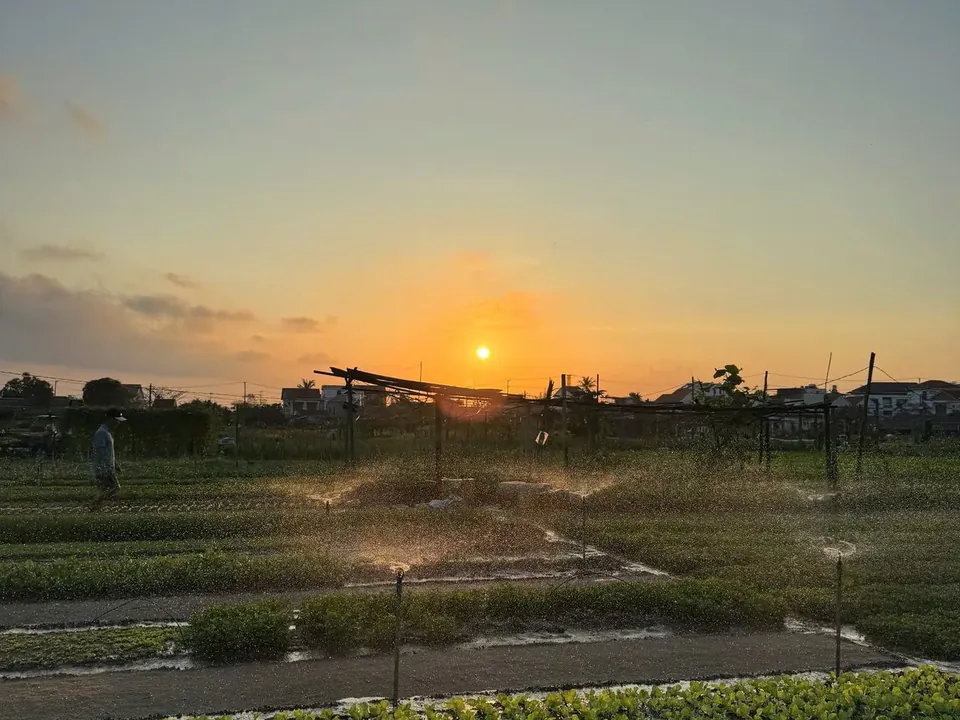
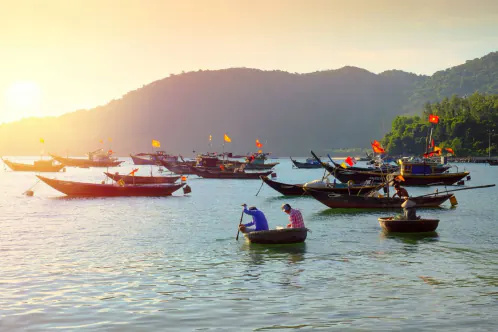
Fifteen minutes away by bike, the fishing villages still take the boat out at four in the morning. The Trà Quế rice paddies grow in terraces flooded and drained with age-old precision. And beyond, the Cù Lao Chàm archipelago — a marine reserve where snorkelling reveals healthy coral.
Vietnam isn't seen in a week, nor captured in a selfie in front of the temple. The food is the reason many people return: phở with a long-simmered broth, bánh mì with freshly baked bread, market cooking that changes at every dawn.
And if there are days to spare, the country keeps going north: the Hải Vân pass between Da Nang and Huế, the imperial Citadel of Huế on the banks of the Perfume river, and further up the karst pillars of Hạ Long Bay. From here you can reach all of it — slowly, which is how it is travelled.
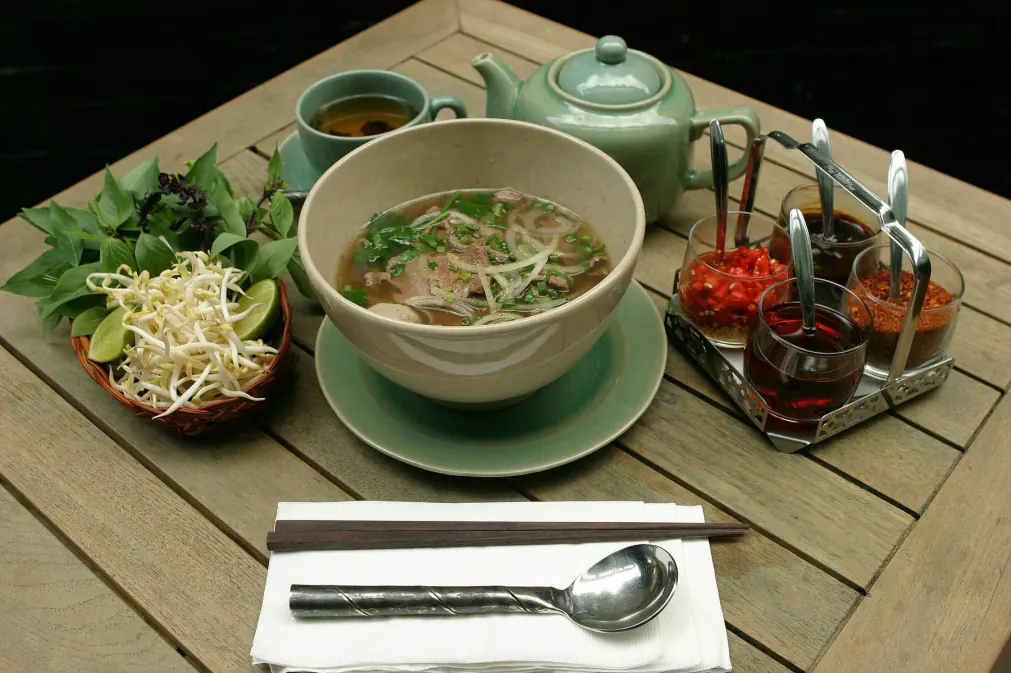


A beef-bone broth simmered for eighteen hours with cinnamon, star anise and black cardamom. It is eaten in the morning, with freshly made noodles, and it is half the country's breakfast.
Vietnam's most famous sandwich: a crisp baguette filled with pâté, chicken, pickles, coriander and chilli. Eaten standing up, at a cart, for the price of a bottle of water.
Green tea scented with fresh lotus flower — left inside the bud for a whole night. Drunk at dusk, it is the closest thing this country has to a ritual of calm.
MONEA's house in Vietnam, right on Hà My beach and twelve minutes from Hội An: where it is, how you get there and what the weather does over a year.
Ha My, Hoi An · Vietnam
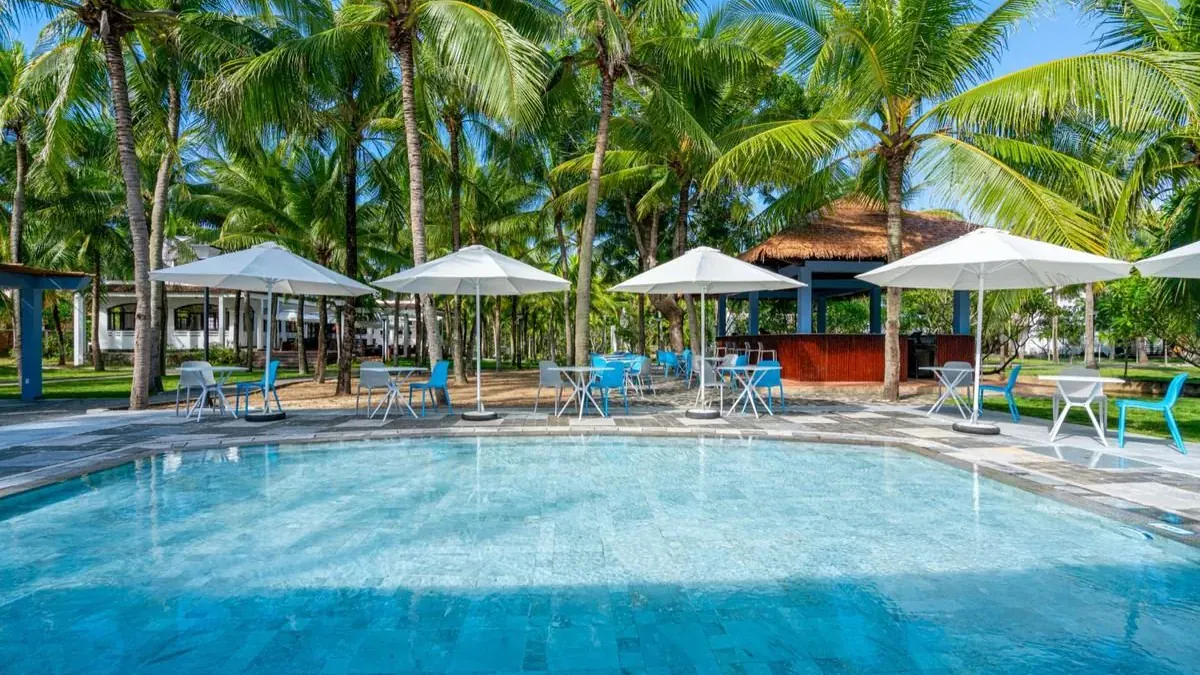
Villas right on Hà My beach, twelve minutes from Hội An's old town, the largest with their own pool facing the sea: the base from which the country is travelled slowly.
Both temperatures are thirty-year normals (1991-2020): the range between the coldest and the warmest month, not a forecast. The distance to the airport is calculated from the house's coordinates. The full method, month by month, is in When to go
Hội An and its surrounds in six stops.
The Japanese bridge, merchant houses, Chinese temples. Best first thing or after seven, when the lanterns are lit.
A market-garden village ten minutes away by bike, with five-hundred-year-old techniques and the herbs that supply the kitchens around here.
An archipelago thirty minutes away by boat. A marine reserve, healthy coral and a fishing village where you eat seafood in a local home.
Cham ruins forty minutes away, the brick towers an entire kingdom raised in a valley. Get there before the day opens: golden light on the stones and not a soul in sight.
Weavers four generations into working silk, the pottery village of Thanh Hà ten minutes away, and tailors who take your measurements one day and deliver two days later.
An evening in the old town: dinner in town and a boat trip on the Thu Bồn releasing lanterns. If your dates fall on a full moon, the whole town is lit that night.
Vietnam moves at two speeds: that of the motorbikes and that of the river. Here we work with the second.