
01
Vieja con papas
The catch of the day — local parrotfish — salt-baked and served with wrinkled potatoes and two mojos: green from coriander, red from paprika. The most honest Canarian recipe, and the hardest to get right off the island.
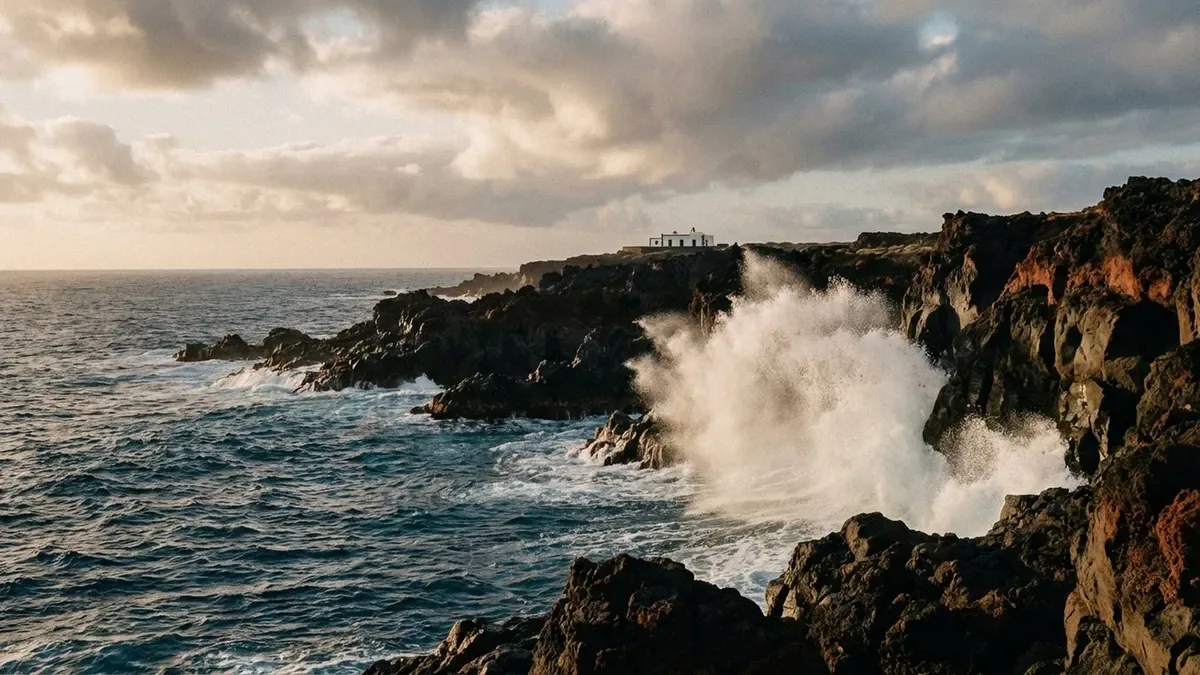
A lunar landscape with vineyards in craters, architecture born of the rock, black beaches too hot for bare feet and hidden coves of impossible water.
At Playa Blanca, on the island's southern tip, close to the coves of Papagayo. It is the end that faces Fuerteventura and the one that catches least of the northern wind.
Lanzarote is like no other island. Not for the volcanic landscape, but for the way it was protected from itself.
César Manrique, the Canarian artist who convinced the whole island that growing too fast kills places, left behind a design manual that still holds half a century on: whitewashed architecture on black basalt, green windows, no building taller than the palm trees, no neon signs. The result is the only island in the Atlantic that looks designed by a single hand.
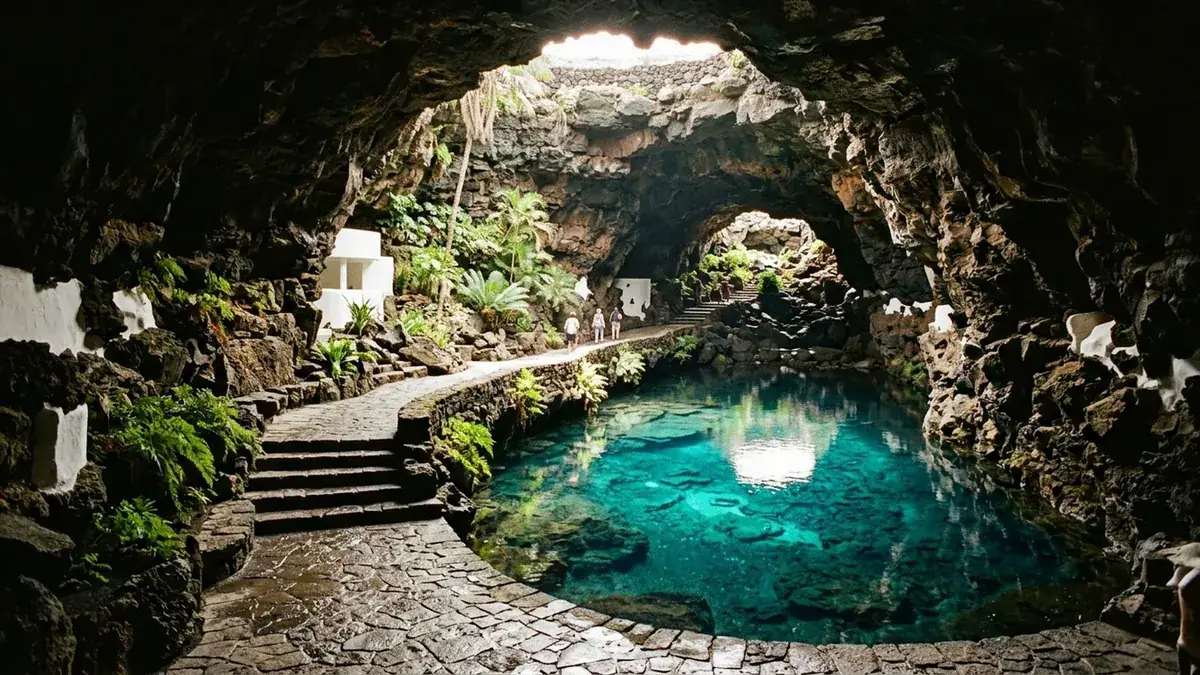
The eruption of Timanfaya in 1730 buried a third of the island in lava. Two centuries later, the farmers discovered that the basalt held the night moisture and sheltered the vines from the wind.
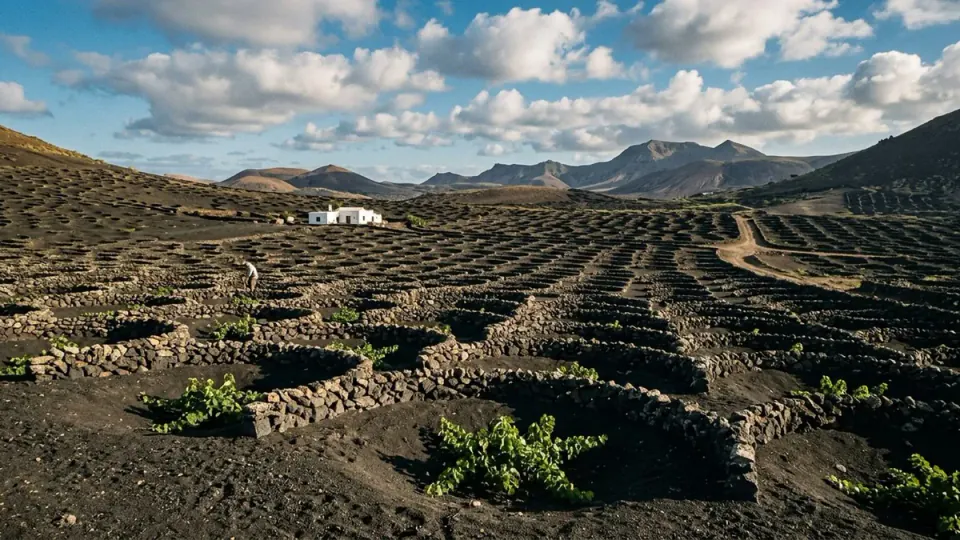
So the vineyards of La Geria were born: semicircular pits dug into the lava, a single vine in each, hundreds of thousands of them. It looks nothing like an ordinary vineyard — it looks like a sculpture. From it comes a volcanic Malvasía that grows with no water but the night dew the basalt soaks up.
The catch of the day — local parrotfish — salt-baked and served with wrinkled potatoes and two mojos: green from coriander, red from paprika. The most honest Canarian recipe, and the hardest to get right off the island.
A white grape that grows in lava craters. La Geria's volcanic Malvasía is one of Spain's great winemaking secrets — barely any of it leaves the island, so you try it here or not at all.
Toasted-wheat gofio, kneaded with warm milk. Majorero cheese cured in paprika. A shepherd's snack — what the farmers carried up the mountain.
MONEA's house in Lanzarote, on the island's southern tip: where it is, how you get there and what the weather does over a year.
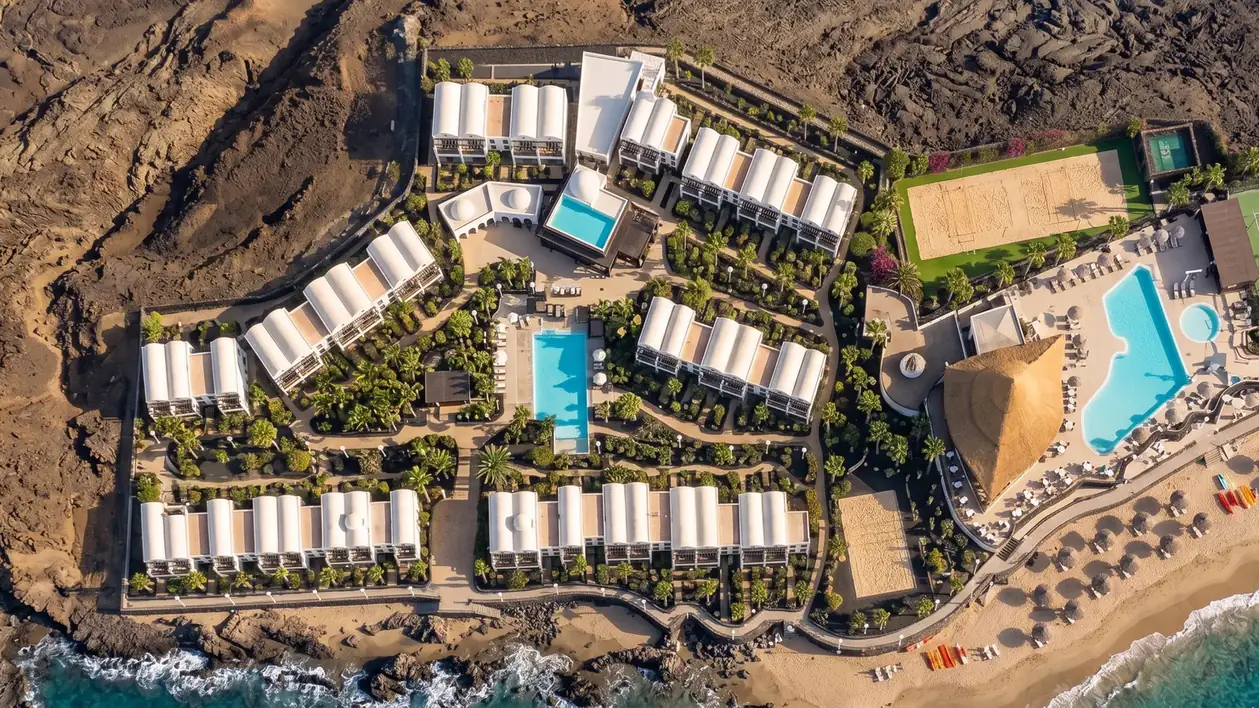
Playa Blanca · Spain
A 215-room all-inclusive family resort in Playa Blanca, with the south coast, La Geria and Timanfaya close at hand: the base from which the island is explored.
Both temperatures are thirty-year normals (1991-2020): the range between the coldest and the warmest month, not a forecast. The distance to the airport is calculated from the house's coordinates. The full method, month by month, is in When to go
The island in six stops. Manrique rules — to this day.
Vineyards in volcanic craters and family wineries where you taste the dry Malvasía and the sweet one, with majorero cheese alongside.
The National Park, and the routes through its lesser-known corners. A few metres below the surface the ground still burns: there they cook with the heat of the volcano.
A Manrique masterpiece — an auditorium inside a volcanic cave. Next to it, the Cueva de los Verdes: the same lava tube, left untamed.
The turquoise coves of the south. Kayaking at dawn and snorkelling in underwater lava formations.
Sunday morning at the oldest market in the islands. Majorero cheeses, mojos, local crafts. Before eleven — after that the cruise crowds arrive.
Cliffs 600 metres above the Atlantic and a surfers' village with a lesson on the black-sand beach. A fish lunch in the cove.
Sun all year round, and an island you can grasp in a day but never exhaust in a year.
