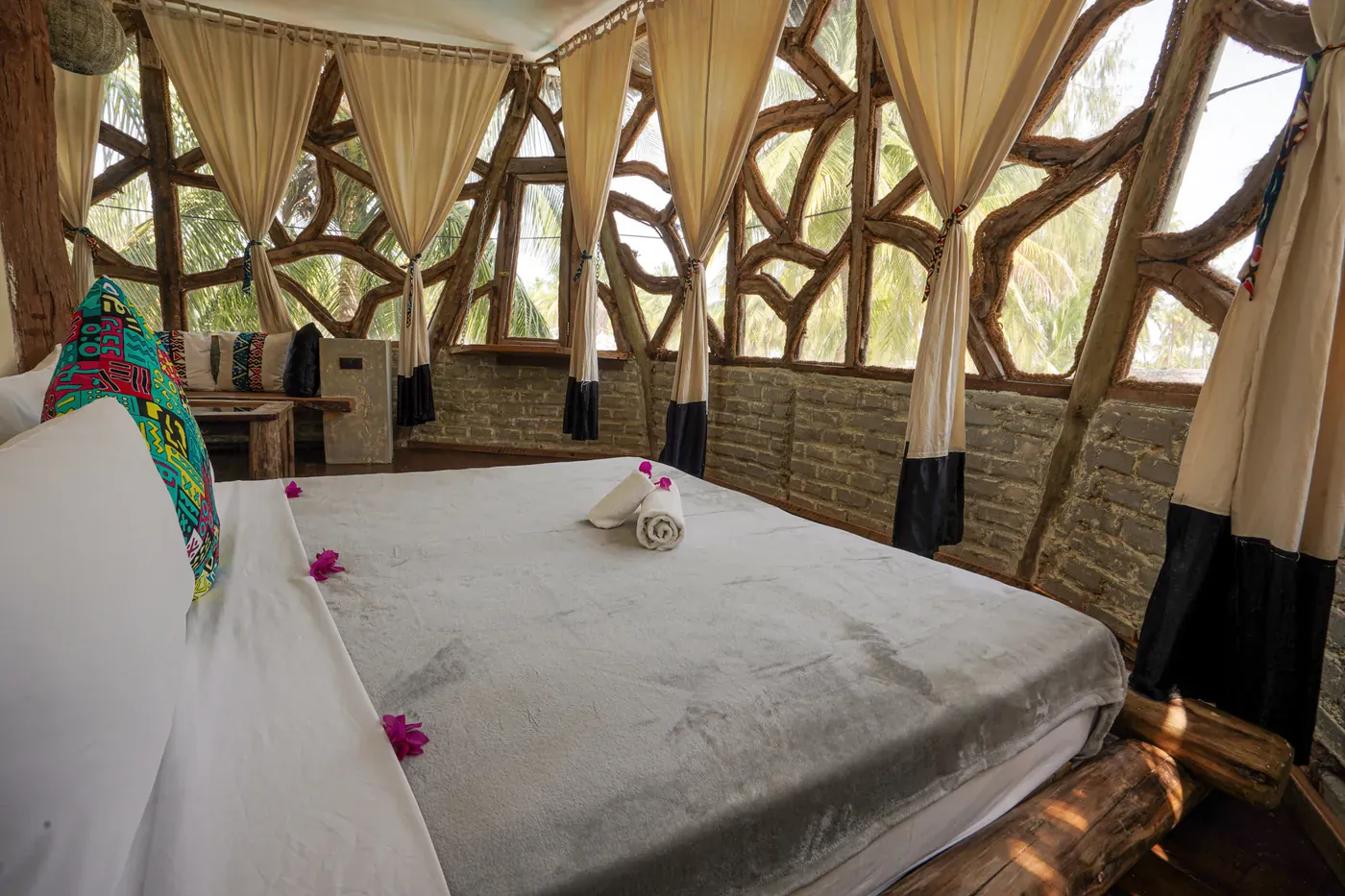
01
Swahili pilau
Basmati rice cooked in fish stock with clove, cardamom and cinnamon. Seven spices, three hours, and never two the same: every household on the island makes it to its grandmother's recipe.
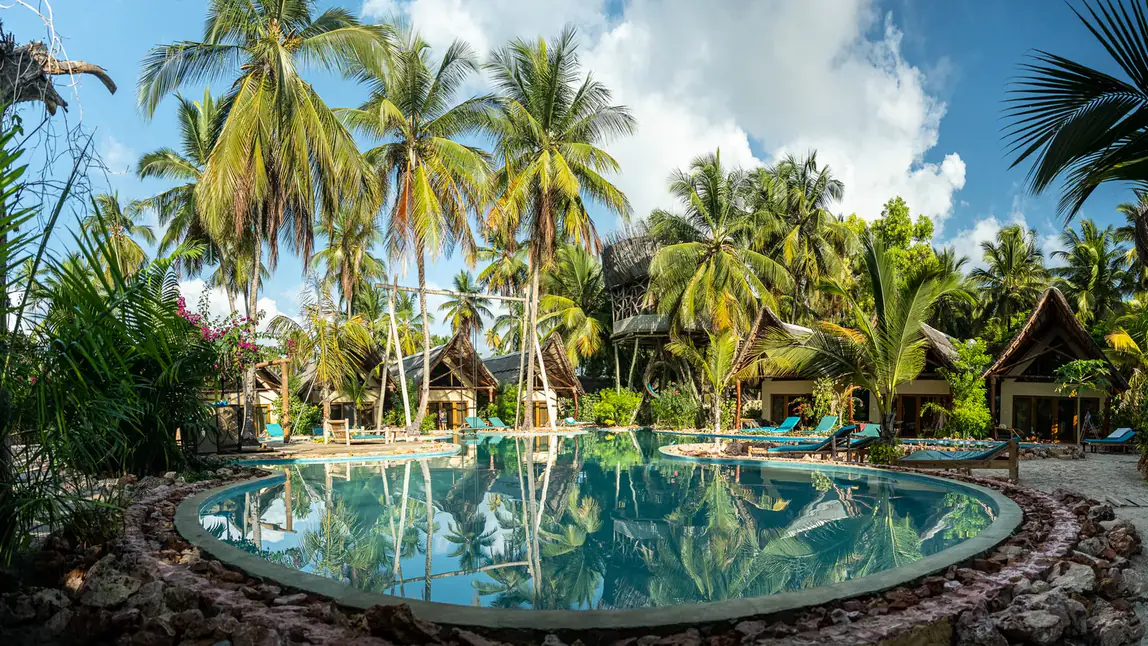
White sand that shifts with the tide, a coral reef twenty metres out and kitesurfers at dusk. A place where time is measured in tides, not hours.
At Paje, on the east coast — the one the mass circuits overlook. Stone Town is about an hour away by road; the spices, in the very air.
Literally. At Paje, on the east coast, the water draws back hundreds of metres to leave a lunar landscape of pools and seaweed that the village women harvest at dawn.
Six hours later the ocean returns turquoise and deep, perfect for swimming. That double rhythm shapes all of life on the island — and it is the first thing to understand if you don't want to reach the beach at the wrong hour.
Basmati rice cooked in fish stock with clove, cardamom and cinnamon. Seven spices, three hours, and never two the same: every household on the island makes it to its grandmother's recipe.
Octopus from the reef, fresh coconut grated by hand and turmeric from the garden. Served with chapati made to order. What Zanzibar eats when no one is watching.
Coffee with cardamom, ginger and clove, served in small cups of cut glass. The eleven o'clock ritual in Stone Town: the elders drink it while playing bao beneath the porches.
Clove, cinnamon and nutmeg. Zanzibar was for centuries the spice capital of the world, and even now the plantations perfume the road: you learn to recognise the nutmeg tree, you bite a lemongrass leaf, and you find out that cloves are picked by hand, one by one.
The houses of Stone Town, a UNESCO World Heritage Site, still bear carved doors that tell each family's story. The dhows, with their triangular sails, fish on as they did five hundred years ago. And at dusk everyone gathers on the beach to watch the sun sink into the Mozambique Channel.
MONEA's only house in Zanzibar, right on Paje beach on the east coast: where it is, how you get there and what the weather does over a year.
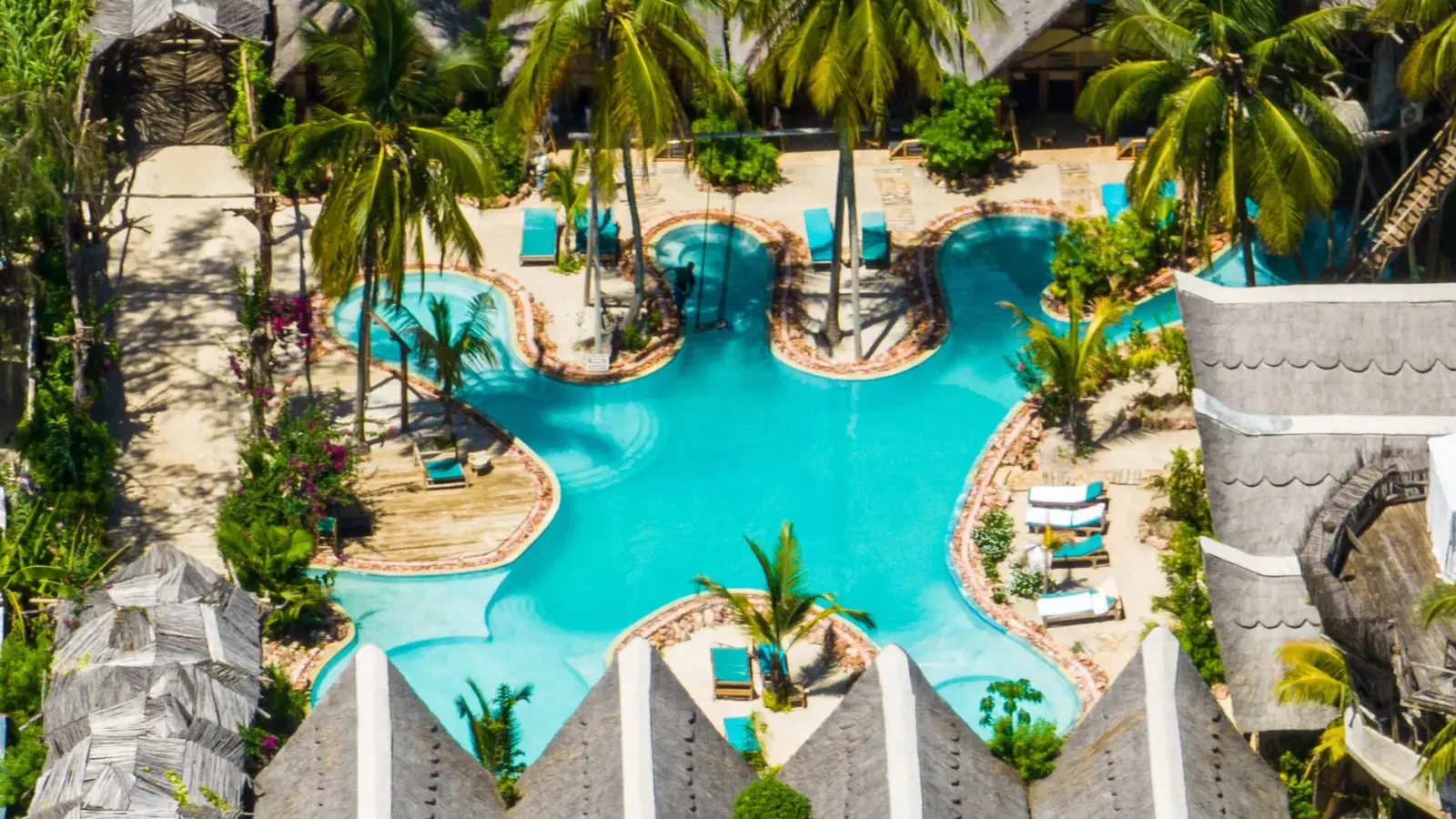
Paje · Tanzania
Twelve units among the palms, a step from Paje's tide. A restaurant with its own menu, kitesurfing and a creative community: the base from which everything on this page is done.
Both temperatures are thirty-year normals (1991-2020): the range between the coldest and the warmest month, not a forecast. The distance to the airport is calculated from the house's coordinates. The full method, month by month, is in When to go
The island in six stops — what the guidebooks miss.
The old town is best visited at six: Darajani market with the freshly landed fish, the bakers firing up their ovens and the Forodhani gardens still empty. The heat and the crowds come later.
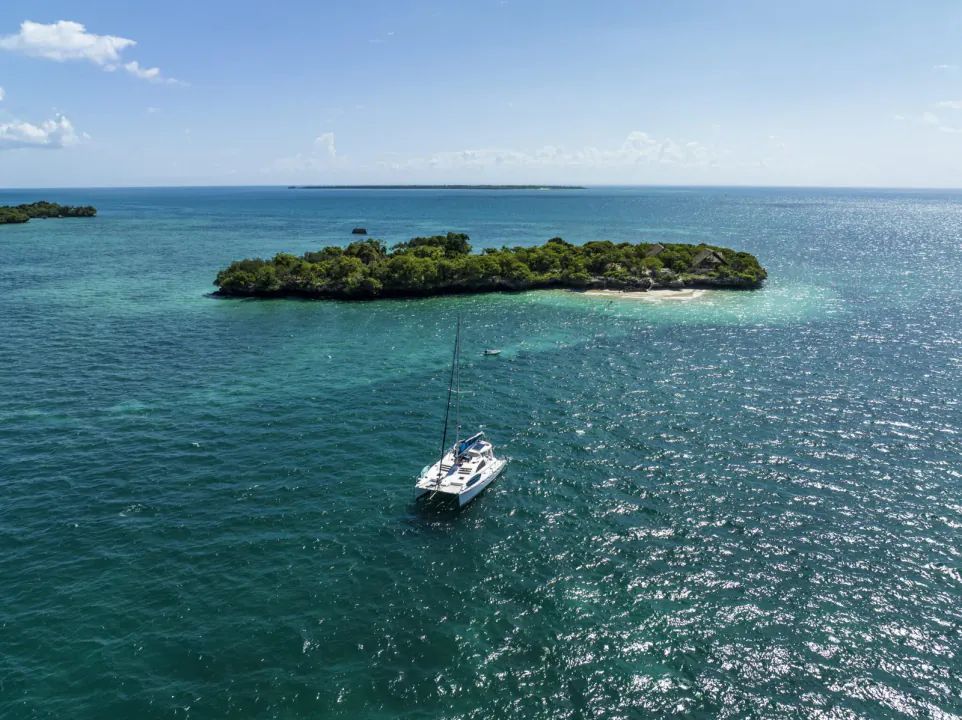
An atoll thirty minutes away by boat. Snorkelling in a protected marine reserve — green turtles, spinner dolphins, coral on the mend.
Twenty minutes south of Paje. A fishing village where the women farm seaweed at low tide.
Spice plantations inland. Cloves are picked by hand and dried in the sun; lunch is with the owning family — coconut rice, samaki wa kupaka and cardamom coffee.
A nature reserve home to red colobus, primates found nowhere else. A trail through the mangroves with a botanist guide.
A traditional sailing boat from Paje, with families who have sailed this coast for generations. Snacks, a cold local beer and the silence of the Indian Ocean.
Between the hotel and the horizon, all of Zanzibar.