«Slow travel» has been worn thin. It usually means doing fewer things, which is a correct and boring idea: most people do not come home exhausted from having done too much, they come home exhausted from having decided everything.
There is a less comfortable and more useful version, and it is the one you learn by staying put: travelling slowly is handing over control. Letting the coast, the kitchen or the light set the order of the day, rather than a list written before leaving home.
In Paje it isn't a pose
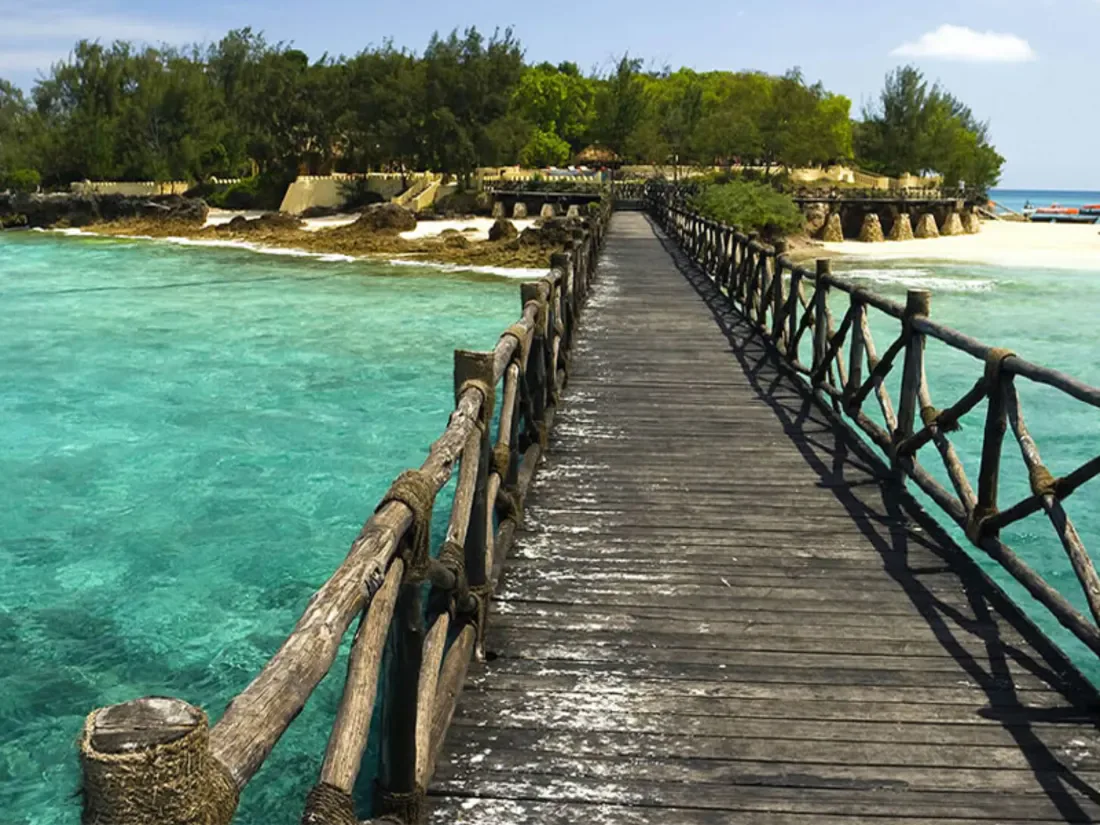
On the east coast of Zanzibar this stops being an opinion. Twice a day the water withdraws hundreds of metres and hands back a floor of pools, seaweed and hard sand you can walk across; six hours later it returns, turquoise and deep, and then you swim.
Nobody negotiates with that. You can reach the beach at the wrong hour exactly as you can miss a train, and the difference is that the sea does not apologise. The practical consequence is that the day gets organised the other way round from how it is organised at home: first you look at what is happening outside, then you decide.
The place already had a timetable when you arrived. The odd thing is trying to impose another one in four days.
Three habits that work
These are not rules or a method: they are the three things that come up most when someone says a trip went well.
- Arrive a day earlier than you need to. The first day is not used, it is spent: it goes on the transfer, on the time change and on working out where everything is. Counting it as a travel day rather than a stay day fixes the whole thing.
- One thing a day. One, chosen in the morning with the day's information rather than three weeks earlier. Everything else still fits; what does not fit is having three appointments and watching the clock between them.
- Go back to the same place. A second coffee in the same spot is worth more than two different coffees: the first time you look at the room, the second you look at the people. It is also the only way for anyone to recognise you, which is what separates a journey from a visit.
Why this is a hotel's business
Because a hotel can speed a journey up or slow it down without meaning to. Arrival, for instance: calling it a welcome instead of a check-in is not a change of vocabulary if it really changes what happens — if instead of processing a formality, ten minutes go on explaining where the bread is in the morning and what time the water goes out.
The same goes for silence, which appears on no list of amenities because it cannot be bought: it is kept, by not putting music where none is needed. It is one of the few things a small hotel does better than a large one, and one of the few that cannot be photographed.
Neither of those two things can be promised on a website. What can be done is to write them down and be held to them.